Create a More Balanced Living Space with Practical Vastu Guidance from Acharya Dr Suvajit
Have you ever wondered how the direction of your main entrance, the placement of your kitchen, or the arrangement of your bedroom could influence the way you experience your home? Many people turn to Vastu Shastra for home planning to create a living environment that feels peaceful, harmonious, organised and connected with traditional Indian architectural principles.
Vastu Shastra is an ancient Indian system of architecture and spatial planning that considers directions, natural elements, proportions and the arrangement of different spaces. Today, homeowners, flat owners and property buyers often seek home Vastu consultation to understand how traditional Vastu principles can be considered when designing, purchasing, renovating or organising a property.
As an experienced astrology and Vastu consultant, Acharya Dr Suvajit, through Shivajyoti Jyotish Karjalaya, provides personalised Vastu guidance for homes, apartments and residential properties.
In this guide, discover 10 important Vastu tips for home that can help you plan your living space thoughtfully while considering traditional Vastu principles and practical requirements.
What Is Vastu Shastra for Home?
Vastu Shastra is a traditional Indian knowledge system concerned with the relationship between buildings, directions, spatial arrangements and the natural environment.
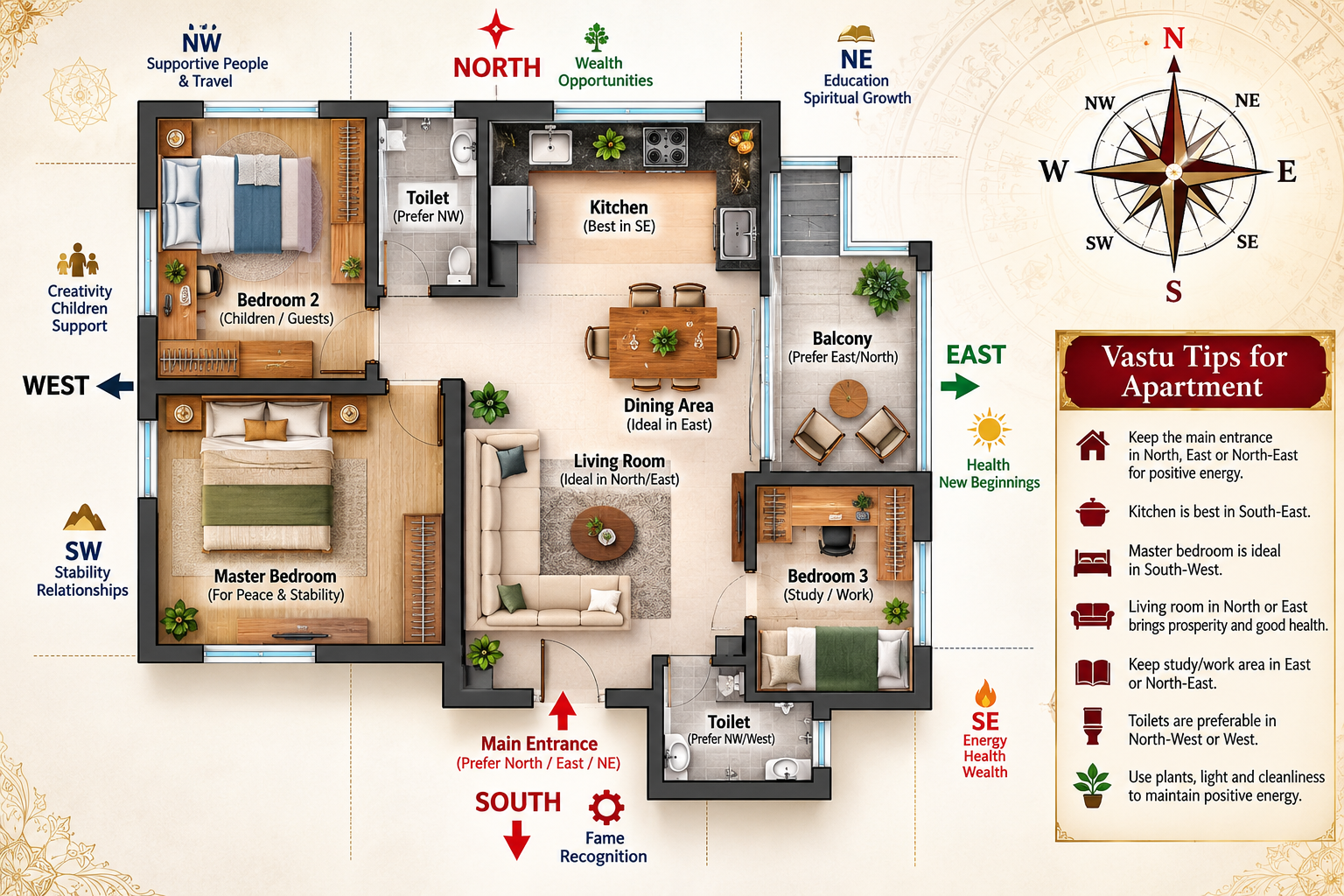
In traditional Vastu practice, different directions and zones are associated with particular qualities and functions. These principles are commonly considered when planning the main entrance, kitchen, bedroom, prayer room, living room and other areas of a house.
The purpose of a thoughtful home Vastu plan is to create a space that supports comfort, functionality, natural light, ventilation and a sense of harmony.
However, Vastu recommendations can vary according to the property’s layout, orientation, surrounding conditions and the particular Vastu methodology being followed. They should be considered alongside structural safety, accessibility and sound architectural planning.
10 Important Vastu Tips for Home
1. Pay Attention to the Main Entrance Vastu
The main entrance is one of the most discussed aspects of Vastu Shastra for home. Traditional Vastu approaches assess the entrance’s direction, exact position and relationship with the overall floor plan.
Practical home Vastu tips:
-
- Keep the entrance clean, well-lit and free from unnecessary clutter.
-
- Ensure the main door opens and closes smoothly.
-
- Maintain a clear, comfortable pathway to the entrance.
-
- Check the entrance’s exact orientation before applying direction-specific Vastu recommendations.
The suitability of an entrance should not be determined by direction alone. Its precise location within the relevant directional zone may also be considered under certain Vastu systems.
2. Consider the North-East Direction Carefully
The north-east, often called Ishan Kon, is regarded as a significant zone in many traditional Vastu interpretations.
When planning a home, this area is often associated with openness, lightness and contemplation.
Traditional Vastu considerations:
-
- Keep the area organised and avoid unnecessary storage.
-
- Where practical, provide sufficient natural light and ventilation.
-
- Consider a meditation or prayer space if it suits the home’s layout.
-
- Avoid making major structural changes solely on the basis of a general Vastu rule.
The most suitable use of this area depends on the actual floor plan, plumbing, structural layout and daily needs of the household.
3. Plan the Kitchen According to Vastu Shastra
Kitchen Vastu is a popular consideration for homeowners planning a new house or renovating an existing kitchen.
In many traditional Vastu systems, the south-east is associated with the fire element and is commonly preferred for the kitchen. Some approaches consider the north-west as an alternative when the preferred placement is impractical.
Kitchen Vastu tips:
-
- Consider the south-east zone when planning a new kitchen, subject to practical constraints.
-
- Ensure adequate ventilation and safe cooking arrangements.
-
- Keep the cooking area clean and organised.
-
- Maintain sufficient space between cooking equipment, water fixtures and electrical appliances.
-
- Prioritise fire safety, hygiene and ease of movement.
A kitchen’s suitability cannot be judged by direction alone. Plumbing, ventilation, electrical safety and the available floor area must also guide decisions.
4. Choose a Suitable Bedroom Location
Bedroom Vastu is often discussed in relation to comfort, privacy and restful sleep.
In many traditional Vastu interpretations, the south-west is commonly preferred for the master bedroom, while other bedroom locations may be suitable depending on the house’s design and occupants’ requirements.
Bedroom Vastu recommendations:
-
- Choose a quiet location with adequate ventilation.
-
- Arrange the bed so that circulation around it remains comfortable.
-
- Reduce clutter and unnecessary electronic distractions.
-
- Use suitable curtains and lighting to support a restful atmosphere.
-
- Consider the room’s proportions, window placement and privacy.
A peaceful bedroom depends on several factors, including noise, temperature, lighting, mattress comfort and personal routines. Vastu principles can be considered as one part of a broader room-planning process.
5. Maintain a Clean and Functional Living Room
The living room is usually a shared space for family interaction, relaxation and welcoming visitors. Good space planning can make it feel more open and comfortable.
Living room Vastu tips:
-
- Keep walking routes clear.
-
- Arrange furniture according to the room’s shape and entrances.
-
- Make effective use of daylight and artificial lighting.
-
- Avoid blocking windows or ventilation openings with bulky furniture.
-
- Provide comfortable seating without overcrowding the room.
Some traditional Vastu systems prefer heavier furniture towards the south or west portions of a room. The final arrangement should still suit the actual layout and the needs of the household.
6. Plan the Pooja Room or Meditation Space Thoughtfully
For households that maintain a prayer room, a dedicated space can provide a quiet setting for daily worship, meditation or reflection.
The north-east is traditionally considered favourable for a pooja or meditation area in many Vastu interpretations, although the best practical location depends on the property.
Pooja room Vastu considerations:
-
- Choose a clean, peaceful and accessible location.
-
- Provide adequate lighting and ventilation.
-
- Keep prayer materials organised.
-
- Ensure safe placement of lamps, incense and other ritual items.
-
- Avoid obstructing corridors or essential household access.
A dedicated room is not essential if the home is small. A clean, well-arranged prayer corner can also serve the purpose.
7. Improve Natural Light and Ventilation
Natural light and airflow are important elements of comfortable residential design. They also align with the traditional emphasis on a healthy, balanced living environment.
Useful home-planning practices:
-
- Keep windows clean and unobstructed.
-
- Use window coverings that allow appropriate daylight.
-
- Maintain functional ventilation in kitchens and bathrooms.
-
- Address dampness, mould and persistent indoor odours promptly.
-
- Avoid overcrowding rooms with unnecessary furniture.
These measures can improve everyday comfort and usability regardless of the home’s orientation.
8. Keep the Centre of the House Organised
In traditional Vastu Shastra, the central area of a building is known as the Brahmasthan. Many interpretations recommend maintaining a sense of openness in this zone.
Brahmasthan Vastu tips:
-
- Avoid unnecessary clutter in the central circulation area.
-
- Keep pathways accessible and safe.
-
- Arrange furniture so that movement through the home remains easy.
-
- Avoid blocking essential access with storage or decorative items.
Not every property has an open central space, particularly modern flats. Existing structural elements should never be removed or altered without professional architectural and engineering advice.
9. Assess Bathroom and Toilet Placement in Context
Bathroom and toilet placement is another frequently discussed aspect of residential Vastu consultation.
Traditional recommendations vary, and an appropriate assessment requires more than identifying a single direction on a compass.
Practical considerations:
-
- Ensure effective drainage and waterproofing.
-
- Maintain adequate ventilation.
-
- Address leakage and dampness quickly.
-
- Keep bathroom doors and fixtures functional.
-
- Consider plumbing routes before planning a renovation.
If you are buying a flat, review the bathroom positions alongside the kitchen, bedrooms, entrances, ventilation and the overall layout. Avoid rejecting an otherwise suitable property based on one isolated rule without understanding the complete plan.
10. Seek a Personalised Home Vastu Consultation
General Vastu tips are useful for understanding traditional principles, but they cannot replace an assessment of the actual property.
Two houses with the same main entrance direction can have very different layouts, room positions and surrounding conditions.
A professional home Vastu consultant may consider:
-
- The property’s actual orientation and floor plan.
-
- Main entrance location and relevant directional zones.
-
- Kitchen, bedroom, bathroom and prayer-space placement.
-
- Room proportions and movement through the property.
-
- The needs of the occupants and planned renovations.
-
- Practical options for improving the use of existing spaces.
Depending on the consultant’s approach, traditional Vastu Shastra and Mahavastu techniques may offer different ways of assessing a property’s layout. Recommendations should be explained clearly, with practical limitations taken into account.
Home Vastu for Flats and Apartments
Many people assume that Vastu principles can only be applied to independent houses. In practice, homeowners also seek flat Vastu consultation for apartments with fixed walls, shared plumbing and limited renovation options.
When assessing an apartment, it is useful to review the complete floor plan rather than focusing only on the main entrance.
Areas that may be considered include:
-
- The apartment’s orientation and entrance position.
-
- The kitchen and cooking arrangement.
-
- Master bedroom and other bedrooms.
-
- Bathroom and toilet locations.
-
- Natural light, ventilation and circulation.
-
- Available options for non-structural changes.
For flats, practical space planning is especially important because major structural alterations may not be permitted or feasible.
What Is the Difference Between Vastu Shastra and Mahavastu?
Vastu Shastra is a traditional Indian discipline concerned with architecture, directions and spatial arrangement. Mahavastu is a contemporary approach that applies its own framework for assessing property zones and recommending changes.
Depending on the practitioner and methodology, Mahavastu assessments may consider directional divisions, entrances, room usage and proposed remedies.
If you are seeking a Vastu consultation, ask the consultant which method is being used, how the property will be assessed and what the recommendations involve. This helps you understand the scope of the service before making decisions about your home.
Common Vastu Mistakes Homeowners Should Avoid
Before making changes to your house, keep these points in mind:
-
- Following generic rules without checking the floor plan: A direction-specific recommendation may not suit every property.
-
- Confusing magnetic north with the plan’s orientation: Verify the actual orientation before assessing directional zones.
-
- Making expensive structural changes unnecessarily: Assess practical alternatives first.
-
- Ignoring ventilation and building safety: Functional and safe design should remain a priority.
-
- Expecting guaranteed results: Vastu is a traditional belief-based system; its recommendations should not be presented as scientifically proven guarantees of wealth, health or family harmony.
-
- Using remedies without understanding their purpose: Ask what a proposed remedy involves and whether it is practical for your property.
A considered approach helps homeowners explore Vastu without overlooking comfort, safety, budget or everyday functionality.
Book a Home Vastu Consultation with Acharya Dr Suvajit
Are you buying a new flat, constructing a house, renovating your existing home or looking for a professional opinion on your floor plan?
Acharya Dr Suvajit offers Vastu consultation for residential properties, flats and other spaces, with guidance informed by traditional Vastu principles and Mahavastu techniques.
A personalized assessment can help you understand your property’s layout, identify areas for further consideration and explore practical options suited to your circumstances.
Consultation services include:
-
- Home Vastu Consultation
-
- Flat and Apartment Vastu Consultation
-
- Residential Vastu Planning
-
- Main Entrance Vastu Assessment
-
- Kitchen and Bedroom Vastu Guidance
-
- Mahavastu Consultation
-
- Vastu Guidance for New Homes and Renovations
Whether you are in Kolkata, elsewhere in West Bengal, or another part of India, enquire about consultation availability and the process for sharing your floor plan online.
Take the next step towards better space planning.
Visit https://acharyasuvajit.com/ to learn more about Acharya Dr Suvajit’s services and request a personalised Vastu consultation.
Frequently Asked Questions About Vastu Shastra for Home
1. Which direction is considered best for a house according to Vastu?
Traditional Vastu systems consider the entrance direction, its precise position and the complete floor plan. No single direction should be treated as universally best for every property.
2. Which direction is preferred for a kitchen according to Vastu?
The south-east is commonly preferred in many traditional Vastu interpretations because of its association with the fire element. Other placements may be considered depending on the property’s layout and practical constraints.
3. Which direction is considered suitable for a master bedroom?
The south-west is commonly recommended for a master bedroom in many traditional Vastu systems. However, room suitability also depends on ventilation, privacy, access and the actual floor plan.
4. Is Vastu important when buying a flat?
Some buyers consider Vastu as part of their property-selection process. Reviewing the overall layout can help them understand how the entrance, rooms and available space align with their preferences. Structural safety, legal checks, location and budget remain essential.
5. Can Vastu be considered in an existing house without demolition?
Yes. A Vastu consultant may identify practical, non-structural changes to consider, such as furniture arrangement, organisation, lighting or room usage. Any proposed changes should be assessed individually rather than assuming that every property requires a remedy.
6. What is the difference between a home Vastu consultant and an architect?
An architect plans buildings with consideration for design, functionality, building regulations and structural requirements. A Vastu consultant assesses a property through traditional Vastu principles. The two roles can complement one another, but they are not interchangeable.
7. Can I get an online Vastu consultation?
Many consultants offer remote assessments based on a floor plan, property orientation, photographs and other relevant information. Confirm the consultant’s requirements, scope of work and fees before booking.
8. How can I book a Vastu consultation with Acharya Dr Suvajit?
Visit https://acharyasuvajit.com/ to explore the available services and enquire about a personalised home or flat Vastu consultation.
Final Thoughts
Vastu Shastra offers a traditional framework for thinking about directions, rooms and the arrangement of a home. The most useful starting point is to understand your actual floor plan, identify your practical requirements and consider recommendations carefully.
If you want to assess your home through traditional Vastu Shastra or Mahavastu techniques, a personalised consultation can help you understand the options relevant to your property.
Connect with Acharya Dr Suvajit at AcharyaSuvajit.com for residential Vastu guidance and consultation enquiries.